
How Soon Can I Drive After Bunion Surgery?
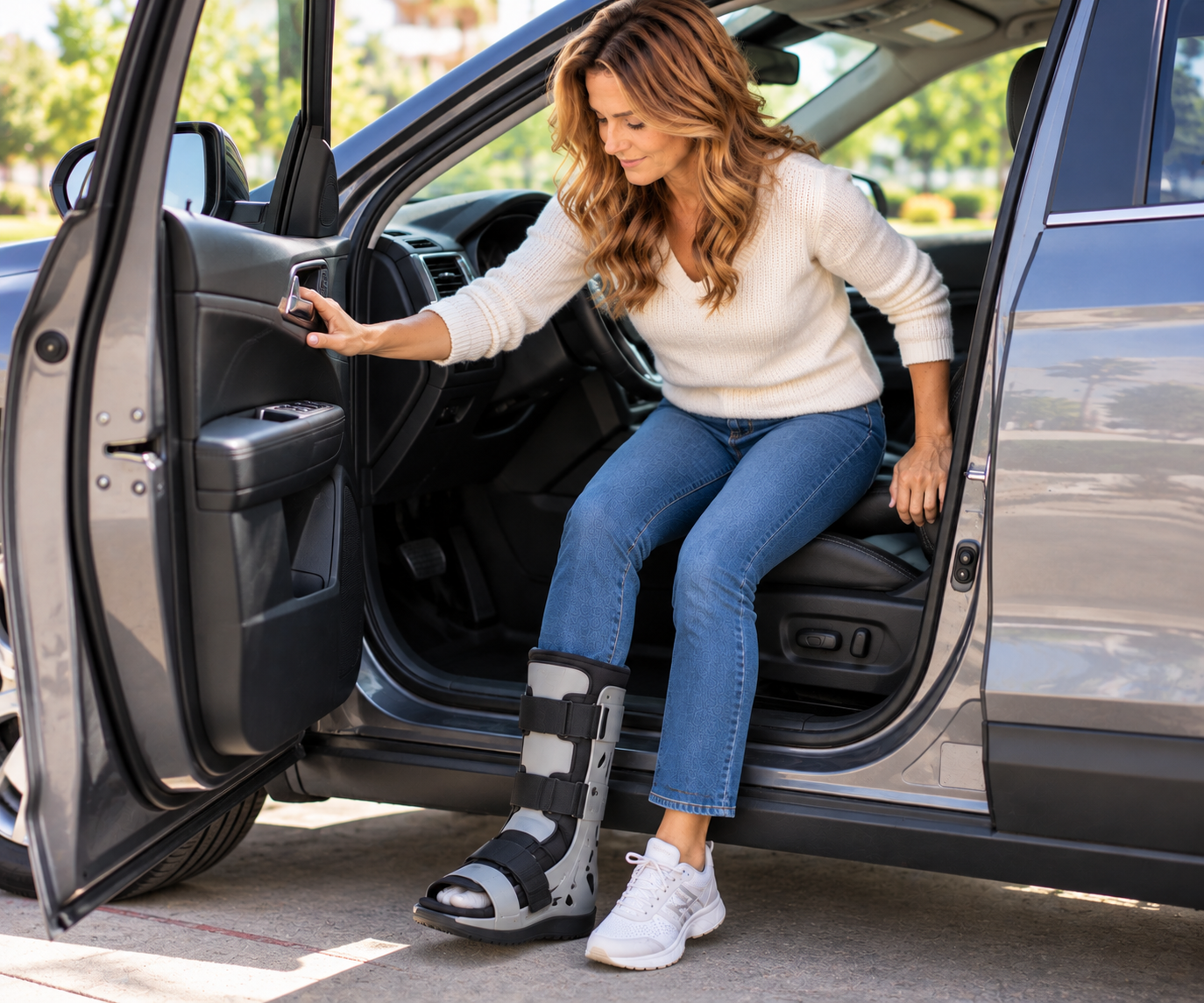
One of the most common questions patients ask when planning bunion surgery is:
“How soon can I drive after bunion surgery?”
The answer depends largely on which foot had surgery, the type of vehicle you drive, and your stage of recovery. Patients must also be off medications that could impair their ability to drive and be able to safely control the vehicle.
In my practice, patients who have left-foot bunion surgery can often return to driving after their first postoperative visit, provided they drive an automatic transmission. After right-foot bunion surgery, patients typically have to wait longer—often around two weeks.
Driving After Left-Foot Bunion Surgery
If your bunion surgery was performed on your left foot and you drive an automatic transmission, you may be able to drive relatively soon after surgery.
I typically allow my patients to begin driving after their first postoperative appointment, assuming their recovery is progressing appropriately and they are no longer taking medications that could impair driving.
This does not apply to patients driving a manual-transmission vehicle because the left foot is needed to operate the clutch.
Driving After Right-Foot Bunion Surgery
Driving after right-foot bunion surgery requires more caution because the surgical foot operates both the accelerator and brake.
In my practice, patients can typically begin short-distance driving approximately two weeks after surgery, assuming their postoperative examination shows they are healing appropriately.
Patients should never attempt to drive while wearing a walking boot.
Instead, I have patients temporarily exchange their walking boot for a flat-bottom postoperative surgical shoe while driving.
The Postoperative Shoe Is for Driving—Not Walking
This distinction is extremely important.
The flat postoperative shoe should stay in the car. It is used temporarily to allow safer access to the accelerator and brake pedals.
Once you arrive at your destination:
Remove the postoperative shoe and put your walking boot back on before getting out of the vehicle and walking.
The postoperative shoe does not replace the protection provided by your walking boot during this stage of recovery. If you have been instructed to walk in a boot, you should continue using the boot whenever you are walking.
Start With Short Drives
Your first drive after bunion surgery shouldn't be a long road trip.
Start with short, familiar drives close to home. This allows you to determine how comfortably you can operate the pedals without placing unnecessary stress on your recovering foot.
You should also leave more distance than usual between your vehicle and the car in front of you.
Why?
Because an unexpected emergency stop may require you to press the brake pedal very hard.
Slamming on the brake will place a lot of force through a recently operated foot. In addition to potentially aggravating the surgical area, sudden pain could cause you to instinctively reduce pressure or lift your foot from the brake pedal.
That creates an obvious safety concern.
Leaving additional following distance gives you more time to brake gradually if traffic ahead suddenly slows.
When Should You NOT Drive After Bunion Surgery?
Do not drive until you can safely and confidently operate your vehicle. You should avoid driving if:
You are taking narcotic pain medication or another medication that impairs alertness or reaction time.
You are wearing a walking boot on your driving foot.
You cannot comfortably move between the accelerator and brake.
You cannot press the brake firmly if necessary.
Your surgeon has not cleared you to drive.
Pain or swelling interferes with your ability to safely control the vehicle.
Remember that being able to sit comfortably in the driver's seat is not the same as being able to safely perform an emergency stop.
So, When Can I Drive After Bunion Surgery?
For my bunion surgery patients, a general guideline is:
Left foot: Patients driving an automatic vehicle can often resume driving after their first postoperative appointment.
Right foot: Patients can often begin short-distance driving at approximately two weeks, temporarily replacing their walking boot with a flat postoperative shoe while driving.
The postoperative shoe remains in the car. Once you reach your destination, put your walking boot back on before walking.
Every patient's recovery is different, so your surgeon should ultimately determine when it is safe for you to return to driving.
Bunion Surgery in Southlake and North Texas
If you're considering bunion surgery in Southlake, Keller, Grapevine, Colleyville, Fort Worth, or the Dallas-Fort Worth area, questions about driving, walking, returning to work, exercise, and normal activities should be discussed before surgery.
Knowing what to expect makes it much easier to plan your recovery.
The goal isn't simply to get you back on your feet—it's to safely get you back to your active life.