
When Is a Bunion Bad Enough for Surgery? 7 Signs It May Be Time for Bunion Correction
If you have a bunion, you may have wondered: “Is my bunion bad enough for surgery?”

It is one of the most common questions I hear from patients considering bunion treatment.
The answer may surprise you. The size of your bunion alone does not determine whether you need surgery. Some people have fairly large bunions with very little discomfort, while others have smaller-looking bunions that significantly interfere with walking, running, work, exercise, or simply wearing shoes.
So, when should you consider bunion surgery?
In general, it may be time to discuss surgical correction when your bunion is causing persistent symptoms, limiting your activities, becoming progressively worse, or interfering with your quality of life despite reasonable nonsurgical treatment.
Here are 7 signs that your bunion may be bad enough to consider surgery.
1. Your Bunion Hurts Regularly
An occasional ache around the big toe joint does not necessarily mean you need surgery.
However, pain that occurs regularly deserves attention.
Bunion pain may occur directly over the bump on the inside of the foot, underneath the big toe joint, or deeper within the joint itself. Some patients notice pain primarily in shoes, while others eventually develop discomfort even when barefoot.
You may also begin changing the way you walk to avoid pressure on the painful area.
When bunion pain becomes a regular part of your day rather than an occasional inconvenience, it may be time to have the deformity evaluated.
2. Your Bunion Is Limiting Your Activities
One of the most important questions I ask patients is not simply “How much does your bunion hurt?”
It is:
“What is your bunion preventing you from doing?”
Maybe you have stopped running because your big toe hurts.
Maybe walking for exercise has become uncomfortable.
Perhaps golf, tennis, pickleball, hiking, or working on your feet has become more difficult.
Some patients gradually modify their lives around their bunion without realizing how much it is affecting them.
If you are avoiding activities you enjoy because of your bunion, the problem may be significant enough to discuss surgical correction.
At Active Life Foot and Ankle of Texas, this is especially important to us. Our goal is not simply to make an X-ray look better. We want to help patients return to their active life.
3. You Are Having Trouble Finding Shoes That Fit
Shoe problems are one of the most common reasons patients with bunions seek treatment.
As a bunion progresses, the front of the foot may become wider. The prominent bone can rub against the inside of shoes, producing redness, irritation, swelling, calluses, or pain.
Patients often compensate by buying increasingly wider shoes.
Eventually, even comfortable athletic shoes may become difficult to wear.
If your shoe choices are being dictated by your bunion—or you are constantly taking shoes off because of pain—it may be time to consider a more permanent solution.
4. Your Bunion Is Getting Progressively Worse
Do bunions get worse over time?
They can, and more often than not they do.
A bunion is more than simply a bump growing on the side of the foot. Hallux valgus is a structural deformity involving the alignment of the bones and joint of the big toe.
As the deformity progresses, the big toe may drift farther toward the second toe and the prominence on the inside of the foot can become more noticeable.
This progression can occur slowly over many years or more noticeably during certain periods of life.
If you compare photographs of your feet from several years ago and notice that your bunion has clearly changed, an evaluation can help determine the severity of the deformity and whether continued observation or treatment makes sense.
Importantly, having a bunion does not automatically mean you should have surgery simply because it could become worse.
The decision should consider your symptoms, activity level, examination, X-rays, goals, and the degree of deformity.
5. Your Big Toe Is Starting to Push Into—or Under—Your Second Toe
A progressing bunion does not always remain an isolated big-toe problem.
As the big toe shifts toward the lesser toes, it may begin pushing against the second toe.
Patients may notice:
The big toe touching or crossing underneath the second toe
The second toe beginning to lift or develop a hammertoe
Pain underneath the second metatarsal
A feeling like there is a pebble underneath the ball of the foot
Callus formation
Increasing difficulty fitting into shoes
This is important because a more advanced bunion can sometimes contribute to problems elsewhere in the forefoot.
Treating the bunion earlier in this process may be different from treating a severe deformity that is accompanied by hammertoes, instability, arthritis, or other forefoot problems.
6. Nonsurgical Bunion Treatments Aren't Working Anymore
Not every painful bunion needs surgery.
There are several nonsurgical treatments that may help make a bunion more comfortable, including appropriate shoes, activity modification, padding, orthotics when appropriate, and other measures designed to reduce irritation or improve foot mechanics.
Toe spacers and bunion splints may also make some patients more comfortable.
But there is an important distinction:
Nonsurgical treatments may improve bunion symptoms, but they generally do not permanently correct the underlying bone deformity in an adult.
If conservative treatment allows you to comfortably do everything you want to do, there may be no reason to rush into surgery.
If you have tried reasonable nonsurgical options and your bunion continues to interfere with your life, surgical correction becomes a more reasonable conversation.
7. You Find Yourself Planning Your Life Around Your Bunion
This is one of the biggest signs patients sometimes overlook.
Are you choosing restaurants based on how far you will have to walk?
Have you stopped wearing certain shoes?
Do you avoid trips that involve a lot of walking?
Did you stop running?
Are you sitting out activities with your family?
Do you immediately remove your shoes when you get home because your bunion hurts?
Are you constantly thinking about where you can sit down because your foot is bothering you?
A bunion does not have to be enormous before it can significantly affect your quality of life.
If you are changing your lifestyle because of your bunion, it may be worth discussing your treatment options with a foot and ankle surgeon.
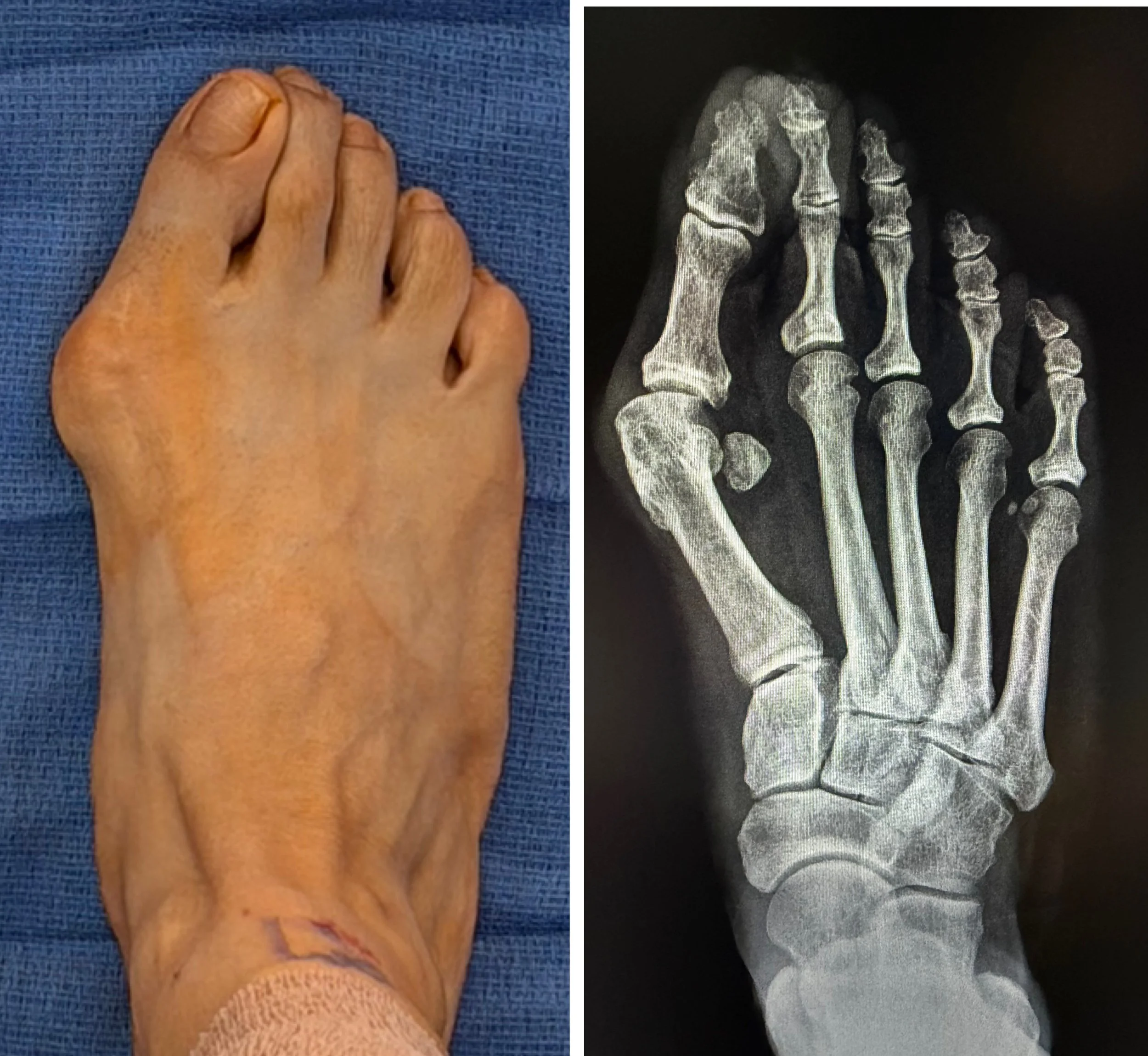
How Bad Does a Bunion Have to Be Before Surgery?
There is no single measurement or X-ray angle that automatically means a patient needs bunion surgery.
The decision is individualized.
When I evaluate a patient for bunion surgery, I consider several factors, including:
How much pain the bunion is causing
How frequently symptoms occur
Activities the patient wants to return to
Difficulty wearing shoes
Whether the deformity is progressing
Alignment of the big toe and first metatarsal
Rotation of the bone
Stability of the first ray
Presence of arthritis
Problems involving the second toe or other parts of the forefoot
Previous nonsurgical treatment
Overall health and ability to safely undergo surgery
This is why two patients whose feet look similar may receive very different recommendations.
We treat the patient—not simply the X-ray.
Should I Have Bunion Surgery Before It Gets Worse?
This is another common question.
I generally do not recommend bunion surgery simply because a patient has a bunion.
Bunion surgery is elective surgery, and the potential benefits need to outweigh the risks and recovery involved.
However, waiting until a bunion becomes extremely severe is not necessarily beneficial either.
A progressive deformity may eventually involve additional joints or toes, and the surgical procedure required for a severe deformity may be different from the procedure appropriate for a less advanced bunion.
The ideal time to have the conversation is often before the bunion has taken over your life—but after it has become clear that the problem is consistently interfering with the things you want to do.
What Are My Bunion Surgery Options?
There is no single bunion operation that is best for every patient.
Modern bunion correction includes several different surgical approaches, and the appropriate procedure depends on the individual deformity.
At Active Life Foot and Ankle of Texas in Southlake, bunion correction options may include procedures such as:
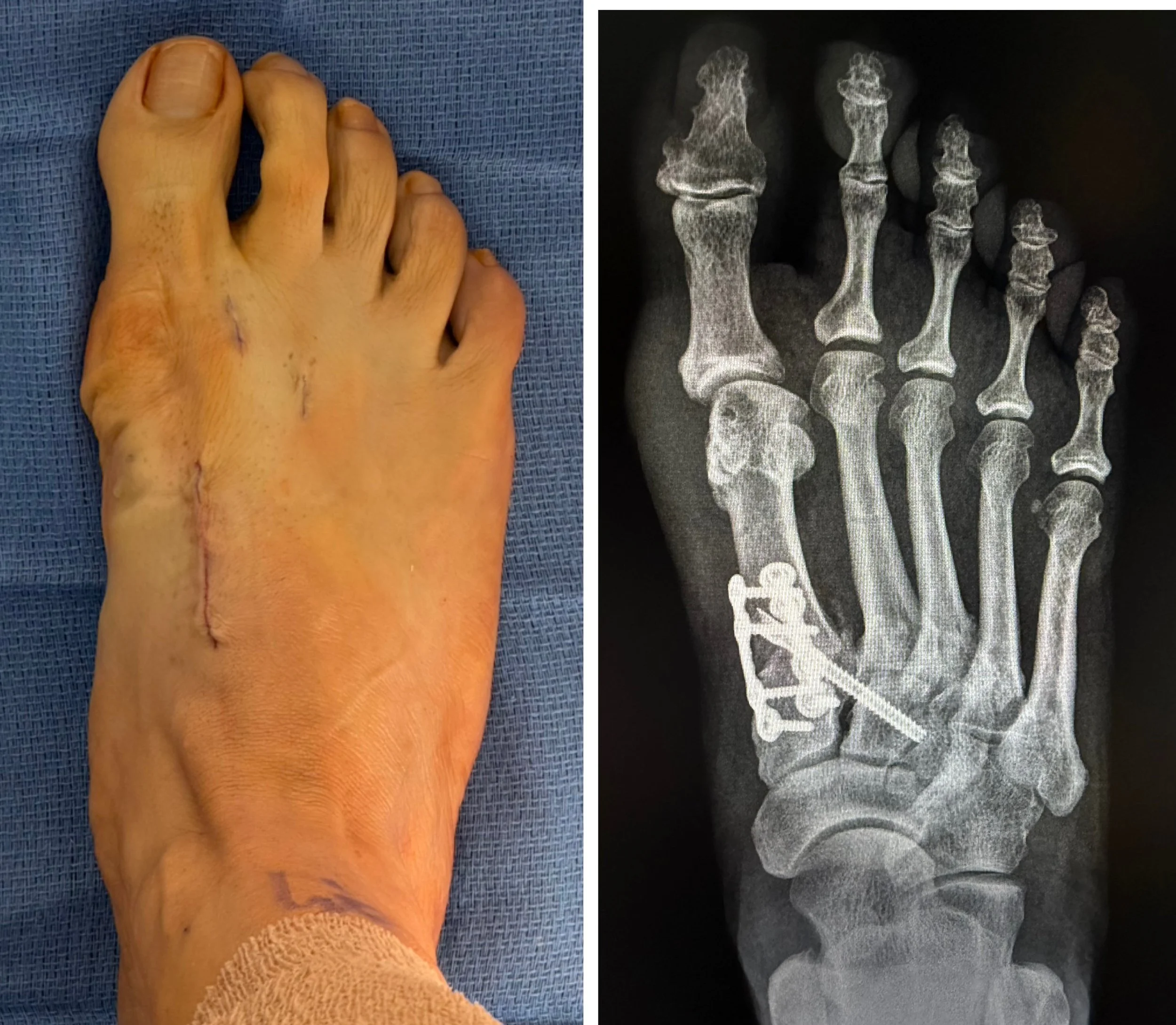
Lapiplasty® 3D Bunion Correction
Lapiplasty is designed to address the bunion deformity in three dimensions and stabilize the first tarsometatarsal joint.
It may be appropriate for many patients with structural bunion deformities, but procedure selection should always be based on the individual patient's examination and imaging.
Minimally Invasive Bunion Surgery
Certain bunions may be appropriate for minimally invasive techniques performed through smaller incisions.
Minimally invasive surgery is not automatically better simply because the incisions are smaller. The goal should always be to select the procedure that appropriately corrects the individual deformity.
Other Bunion Procedures
Depending on the patient's anatomy, age, arthritis, previous surgery, activity level, and severity of deformity, other procedures or combinations of procedures may be more appropriate.
This is one reason I recommend choosing a surgeon who performs multiple types of bunion correction rather than trying to fit every patient into the same operation.
Am I Too Young for Bunion Surgery?
Age alone usually does not answer the question.
A younger adult with a painful, progressive bunion that prevents participation in sports or other activities may have a very different situation from someone with a painless deformity.
The decision should be based on symptoms, skeletal maturity, deformity, activity level, expectations, and other individual factors.
Am I Too Old for Bunion Surgery?
There is also no specific age at which someone automatically becomes “too old” for bunion surgery.
Overall health, circulation, bone quality, medical conditions, medications, activity level, and surgical goals can be more important than the number on your driver's license.
Many patients seek bunion correction because they want to remain active as they get older.
Is Bunion Surgery Worth It?
That depends on what your bunion is costing you.
Not simply financially—but in terms of your lifestyle.
If you have minimal pain and can comfortably participate in all the activities you enjoy, surgery may not provide enough benefit to justify the recovery.
If your bunion causes frequent pain, limits your shoes, prevents exercise, interferes with work, or stops you from participating in activities you enjoy, correction may have considerably more value.
A good surgical consultation should help you understand both sides of that equation.
Do I Need Bunion Surgery? Ask Yourself These Questions
Before scheduling a bunion consultation, ask yourself:
Does my bunion hurt regularly?
Am I changing my activities because of my foot?
Is it becoming harder to find comfortable shoes?
Has my bunion noticeably worsened?
Is my big toe beginning to affect my second toe?
Have reasonable nonsurgical treatments stopped helping?
Would correcting my bunion allow me to return to activities that are important to me?
If you answered yes to one or several of these questions, it does not automatically mean that you need surgery.
It does mean that it may be time for an evaluation.
Looking for a Bunion Surgeon in Southlake, Keller, or the Dallas-Fort Worth Area?
I am Dr. Paul Steinke, DPM, FACFAS, a board-certified foot and ankle surgeon and the 3D BunionDoc at Active Life Foot and Ankle of Texas in Southlake, Texas.
I see patients from Southlake, Keller, Grapevine, Colleyville, Trophy Club, Westlake, North Richland Hills, Fort Worth, and throughout the Dallas-Fort Worth area and around the country who travel who are looking for treatment options for painful bunions.
My approach is simple: having a bunion does not mean you automatically need surgery.
The first step is determining why your foot hurts, how the deformity is affecting your life, and which treatment options make sense for you.
When surgery is appropriate, we can discuss the different approaches to bunion correction and determine which procedure best fits your anatomy, activity level, and goals.
If your bunion is keeping you from your active life, it may be time to have it evaluated.

Active Life Foot and Ankle of Texas
Southlake, Texas
Where your active life begins again.
Frequently Asked Questions About When to Have Bunion Surgery
When is a bunion bad enough for surgery?
A bunion may be worth considering for surgery when it causes persistent pain, limits normal activities, makes shoes difficult to wear, continues to progress, affects the other toes, or remains symptomatic despite reasonable nonsurgical treatment.
How painful does a bunion have to be before surgery?
There is no specific pain level required for bunion surgery. Frequency of pain and its effect on your daily activities are often more meaningful than a numerical pain score.
Should I wait until my bunion becomes severe before having surgery?
Not necessarily. Surgery generally should not be performed solely to prevent a painless bunion from worsening, but waiting until a deformity becomes extremely severe is not always advantageous. An evaluation can help determine the appropriate timing.
Can bunions be fixed without surgery?
Nonsurgical treatments can often reduce symptoms, but they generally cannot permanently realign the underlying bone deformity of an adult bunion. Surgery is the method used to structurally correct the deformity.
What happens if I never have bunion surgery?
Some bunions remain relatively stable, while others progressively worsen. If your bunion is not painful or limiting your activities, observation may be reasonable. Regular evaluation can be helpful if you notice increasing deformity or symptoms.
What type of bunion surgery is best?
There is no single best bunion operation for every patient. The appropriate procedure depends on the severity and three-dimensional characteristics of the deformity, joint condition, activity level, age, previous procedures, and other individual factors.
How do I know if I am a candidate for Lapiplasty?
Determining whether Lapiplasty is appropriate requires evaluation of your foot, weight-bearing X-rays, symptoms, medical history, activity goals, and the characteristics of your bunion deformity.
Click HERE to scehdule an appointment with the 3D Bunion Doc