
Do Bunions Get Worse? What You Can Do to Slow Bunion Progression
By Paul Steinke, DPM, FACFAS – 3D BunionDoc
Active Life Foot and Ankle of Texas | Southlake, TX
One of the most common questions patients ask me is, “Will my bunion keep getting worse?”
The short answer is: it can, and often does. Bunions are generally progressive structural deformities, although some change very slowly while others worsen more quickly.
Why Do Bunions Get Worse?
A bunion is not simply a bump growing on the side of your foot. It develops as the bones of the first ray and big toe gradually move out of alignment.
In many patients, an important part of the problem is instability or excessive motion at the first tarsometatarsal (TMT) joint, located in the midfoot. This can allow the first metatarsal to move and rotate out of its normal position while the big toe shifts toward the second toe.
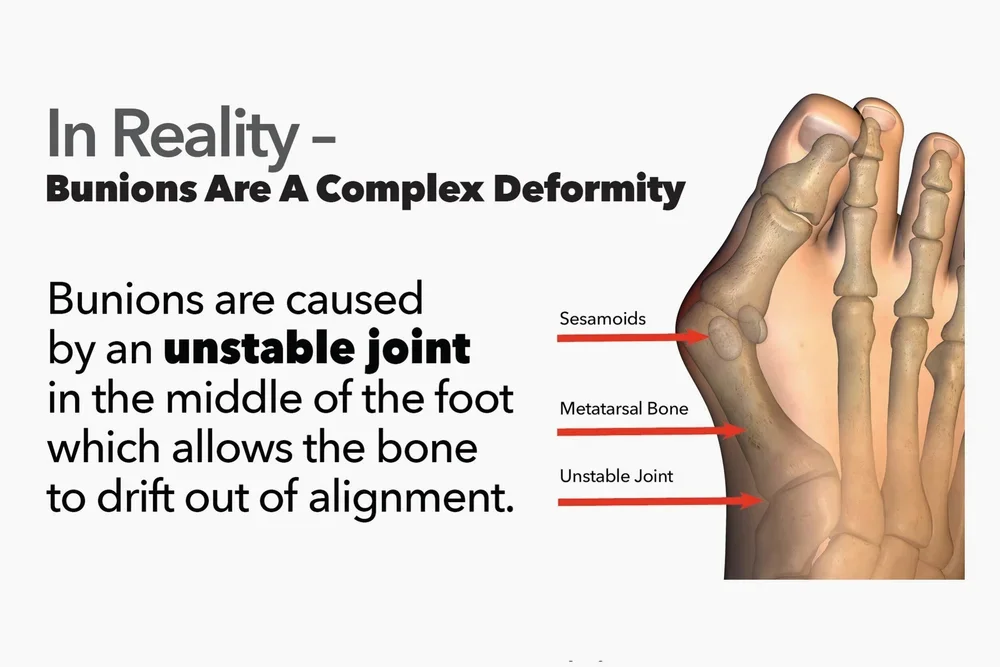
Unstable joint is the 1st TMT joint.
That's why I often tell patients:
The bump isn't the problem—the bump is the result of the problem.
Can You Stop a Bunion From Getting Worse?
Sometimes we can improve the mechanics of the foot and potentially slow progression, but nonsurgical treatment cannot guarantee that a bunion will stop getting worse.
Two of the most important treatments are:
Better footwear. A properly fitted shoe with a wider toe box reduces pressure on the bunion and gives the toes more room.
Inserts and custom orthotics. Orthotics can support the foot, improve mechanics and help control abnormal motion. They can be particularly helpful when instability contributes to the deformity.
However, shoes and orthotics do not permanently realign an established bunion. They are designed to improve comfort and mechanics, not surgically correct the bones.
Do Bunions Get Worse With Age?
They can, but age alone isn't the cause. The mechanical forces contributing to a bunion continue with every step you take.
Some bunions remain relatively unchanged for years. Others gradually become larger and may eventually cause:
Increased pain and inflammation
Difficulty fitting into shoes
The big toe pushing into the second toe
Hammertoes or crossover toes
Pain underneath the ball of the foot
Limitations with walking, running or exercise
When Should You Consider Bunion Surgery?
Having a bunion does not automatically mean you need surgery.
I generally recommend considering surgical correction when the bunion:
Hurts regularly, limits the activities you want to do, or makes normal shoe gear difficult or uncomfortable.
If your bunion isn't interfering with your life, better footwear, inserts, custom orthotics and observation may be all you need.
If it is interfering with your active life, it may be time to discuss surgical correction.
For appropriate patients, procedures such as Lapiplasty® 3D Bunion Correction can address the bunion in three dimensions while stabilizing the first TMT joint. The appropriate procedure, however, should always be selected based on the individual patient's deformity and goals.
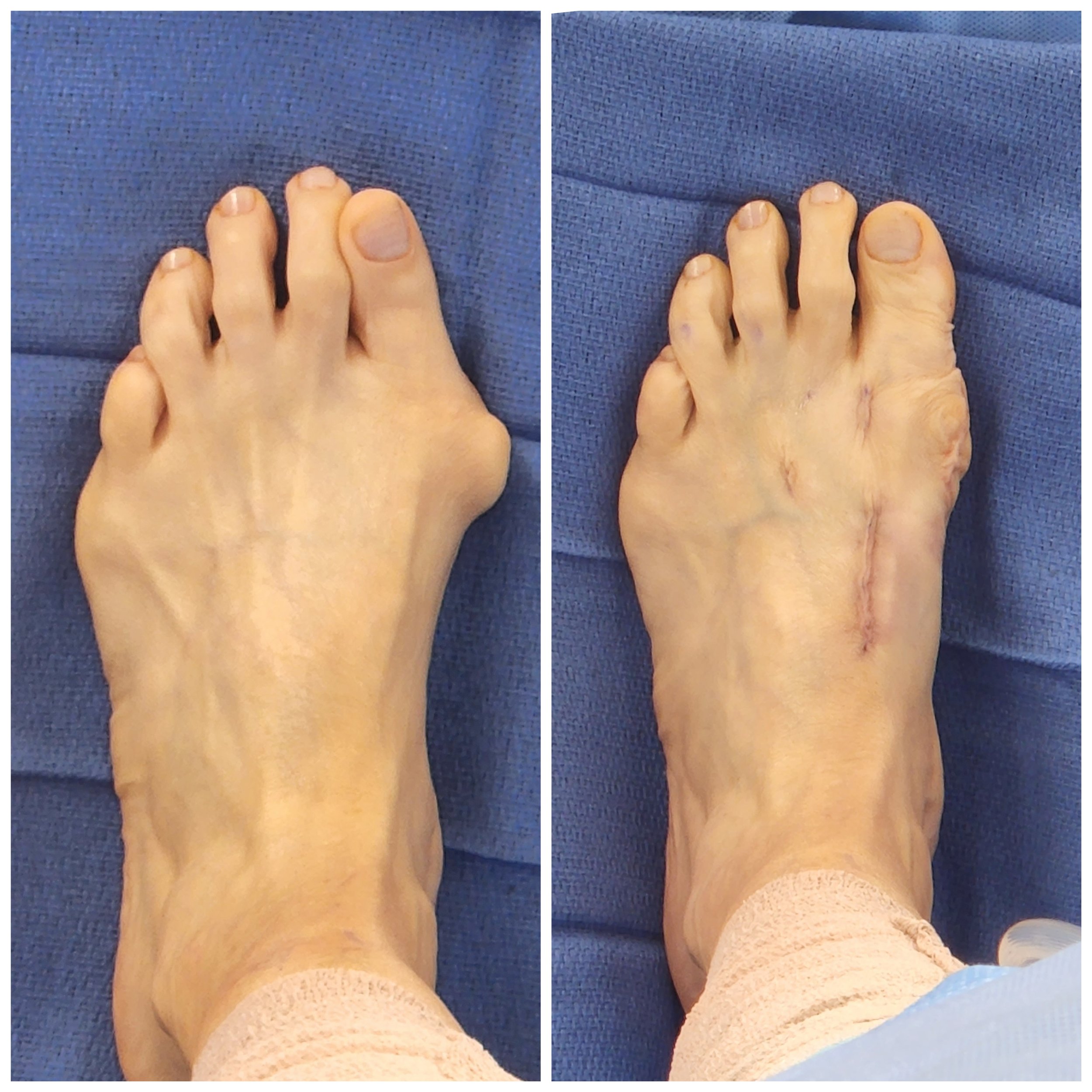
Immediate post-operative images. Smaller incisions, cosmetic closure compared to traditional bunion surgery.
Bunion Treatment in Southlake, Keller & DFW
I'm Dr. Paul Steinke, DPM, FACFAS, the 3D BunionDoc at Active Life Foot and Ankle of Texas in Southlake, Texas.
My goal isn't to operate on every bunion. It's to determine why your foot hurts, what you want to get back to doing, and the best way to get you there—with or without surgery.
Where your active life begins again.